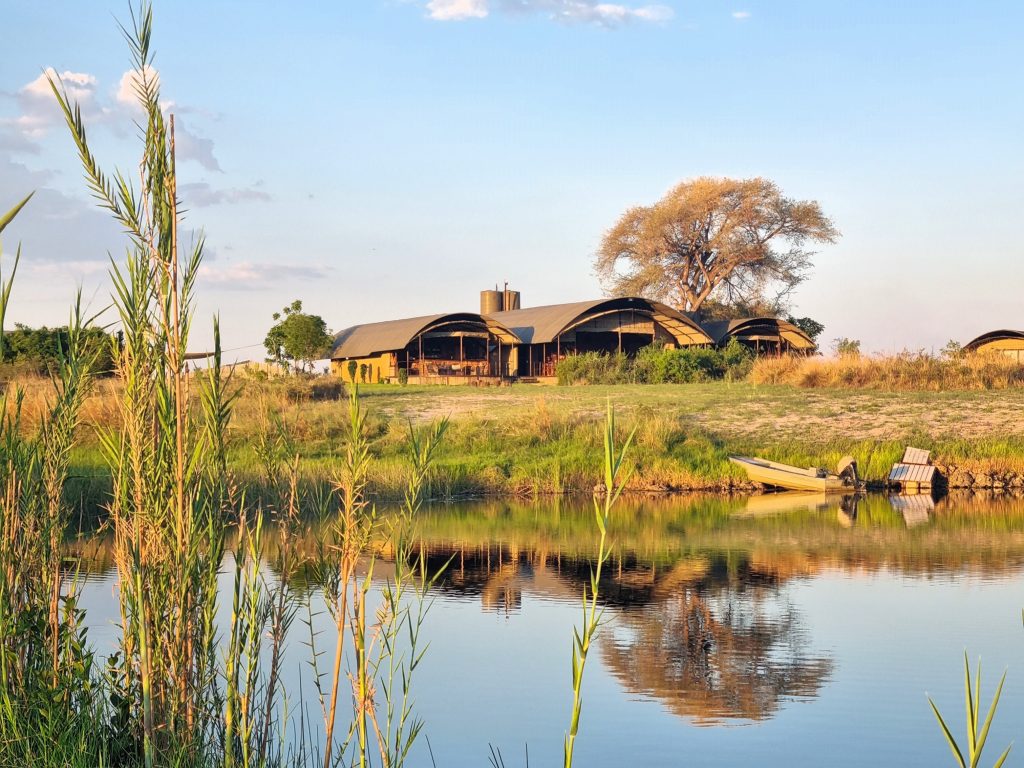
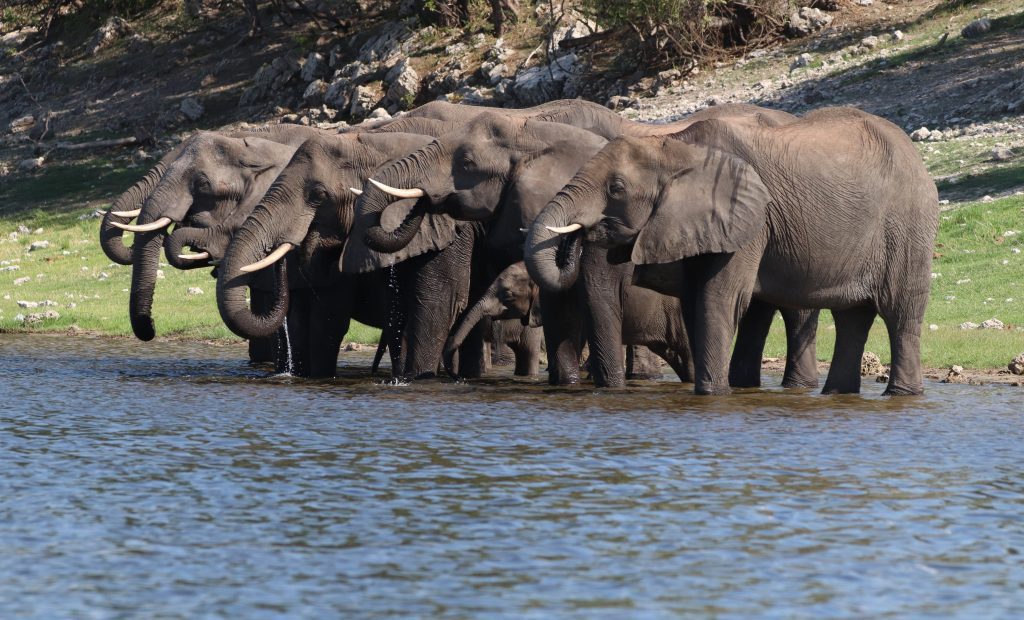
Located on the Namibian banks of the Chobe River, Serondela Lodge offers expansive views into the Chobe National Park, a spot famous for its lion sightings and for being a popular elephant corridor. The comfy chairs at the bar invite one to linger and, binocs in hand, we scan the banks across the river. We see three lions, just lazing about, as is their habit, plus several family groups of elephants making their way to the river, their haste increasing the closer they get to the water’s edge.
Blue-cheeked bee-eaters fly overhead, perching momentarily in the large ana tree (Faidherbia albida). A western marsh harrier flies above us and is soon bombarded by a pair of shrieking crowned lapwings, they must have a nest nearby.
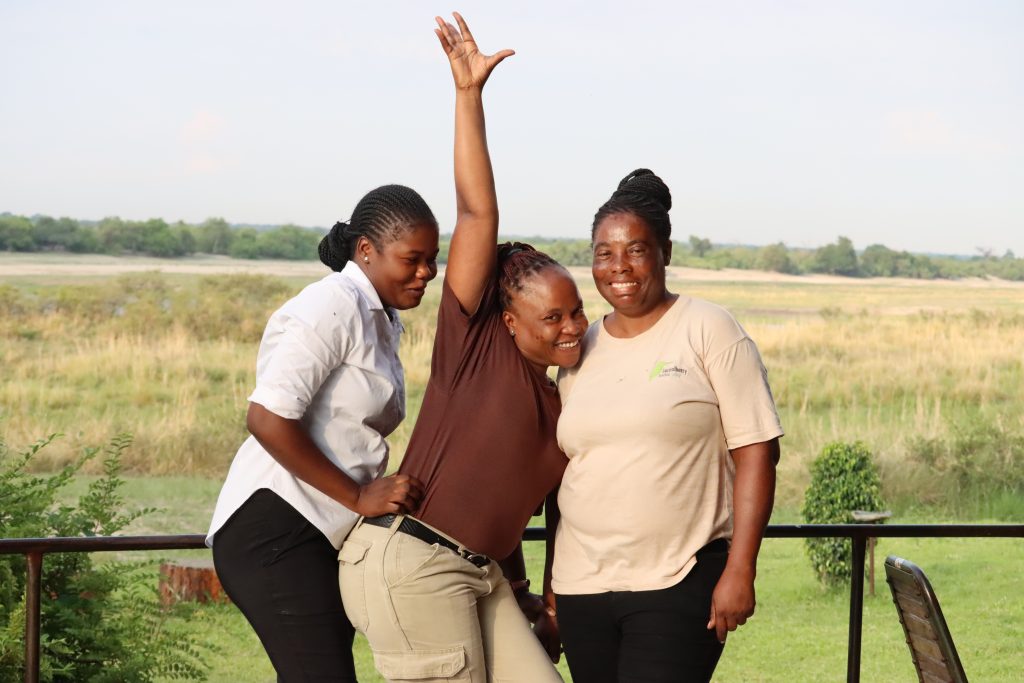
Serondela isn’t about the frills and fancy touches… it’s about a sense of place, the people, and about being in the embrace of an unspoilt natural environment, where the only sound one hears is the call of the fish eagle, the honking of hippos, trumpeting of elephants and the roaring of lions – which we hear well into the night.
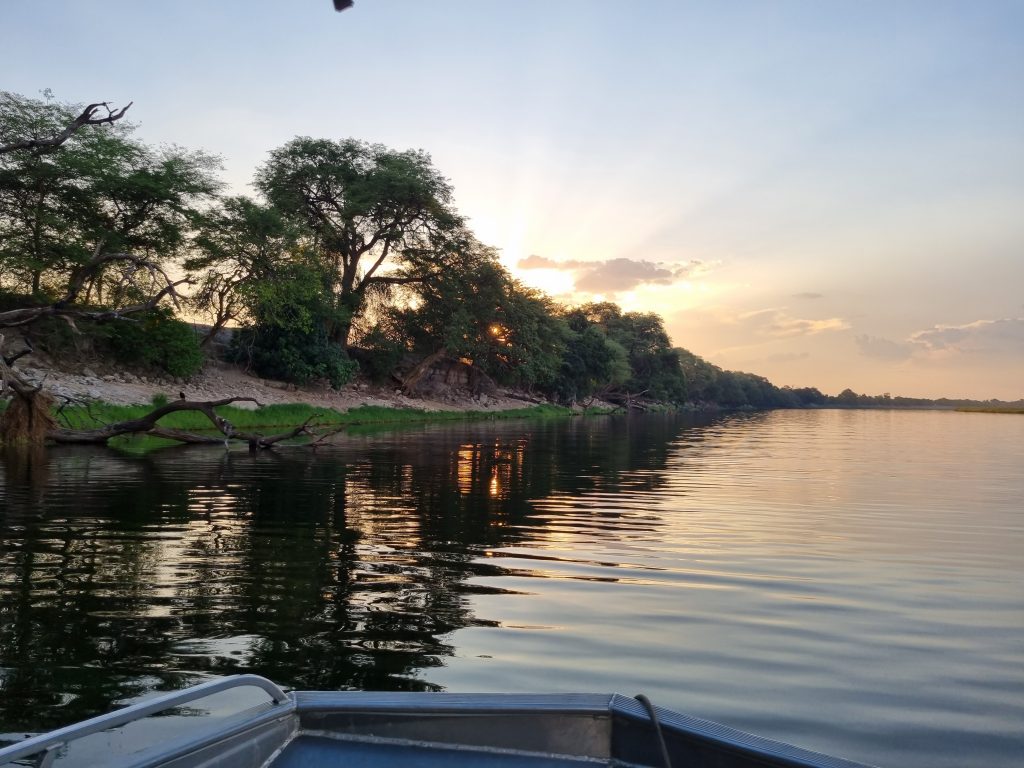
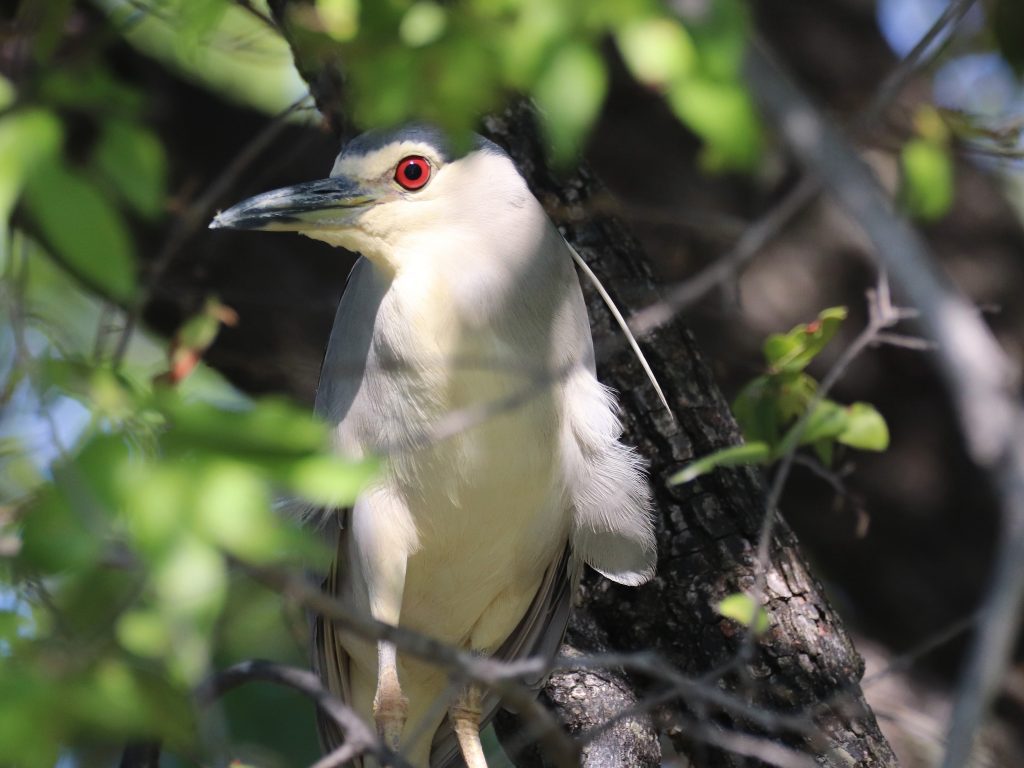
Boat cruises enable close encounters with game as well as great birding – we find black-crowned night herons, a first for us and see plenty of aquatic birds along the water’s edge.
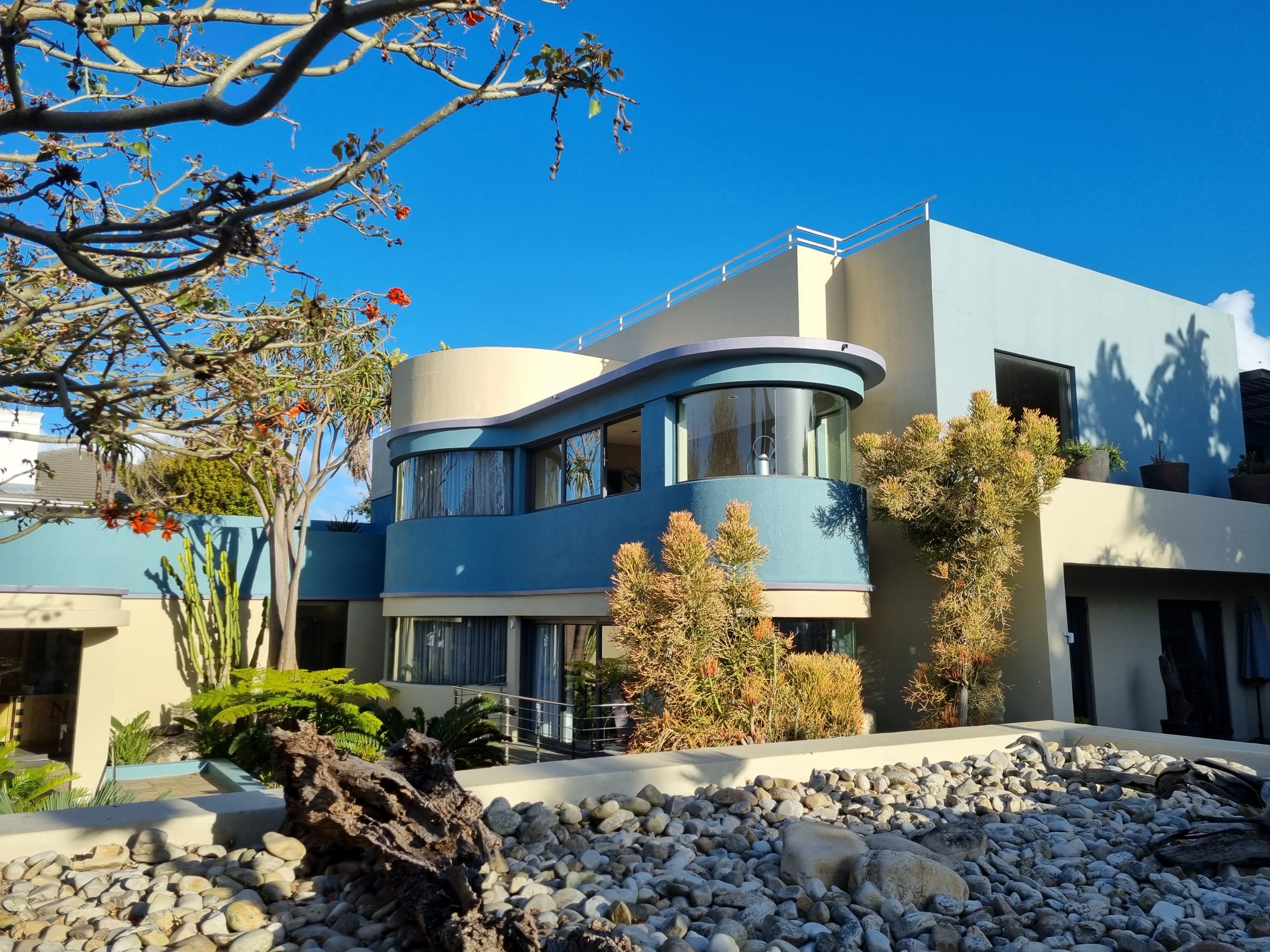
I love the modernist architecture of Serondela, its eco-bag plastered walls topped with a curved tented roof sit easily in the landscape. Simone Micheletti, owner of Serondela Lodge and MD at Wild Waters Group of Lodges, tells us that they are very conscious of their impact on the environment, and to reduce the quantity of material requiring transportation during construction, they decided to use eco bags – in addition to ensuring high thermal insulation, the sand from the bags came from the river. Additionally, water from the lodge is purified and sterilised before being fed back into the Chobe and waste is taken back to Katima Mulilo, for recycling and disposal.
The interior of our luxury chalet is light and airy, with large windows on one side and glass and gauze sliding doors leading out onto a private patio offering fabulous views, wildlife sightings and photographic opportunities – especially during the dry season (May to October). The contemporary décor complements the polished concrete floors, which are wonderfully cool under-foot, a large mosquito net envelops the bed. The ensuite bathroom is spacious with simple, white-wash style walls, double basins and a quirky semi-circular stainless steel shower.
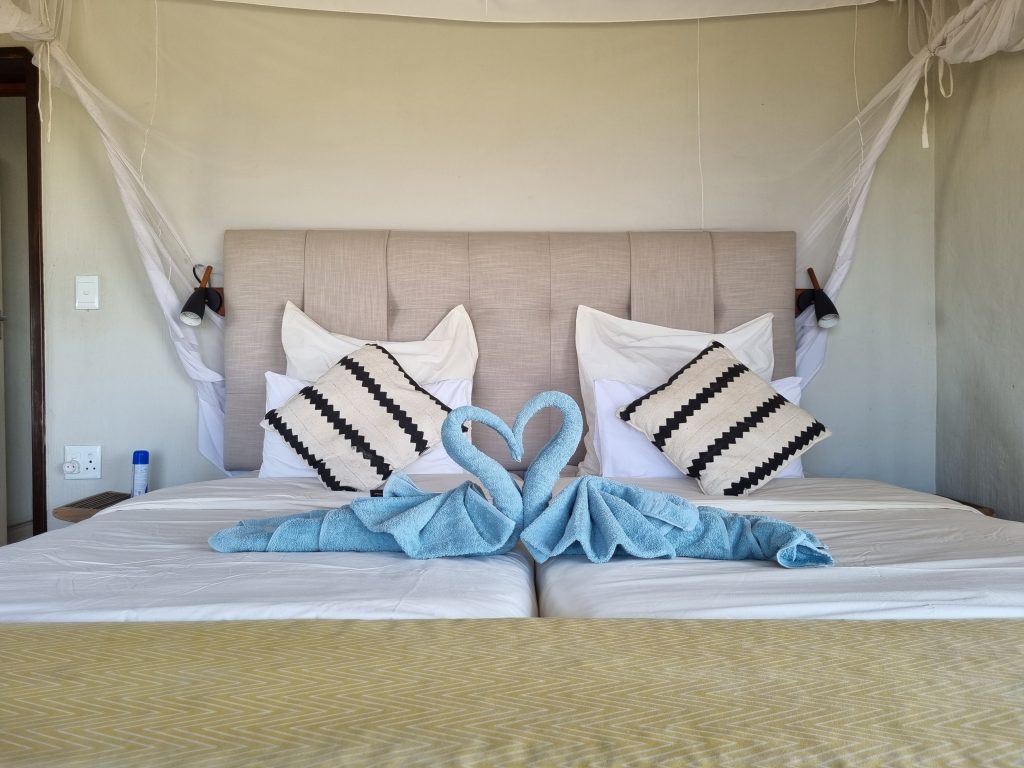
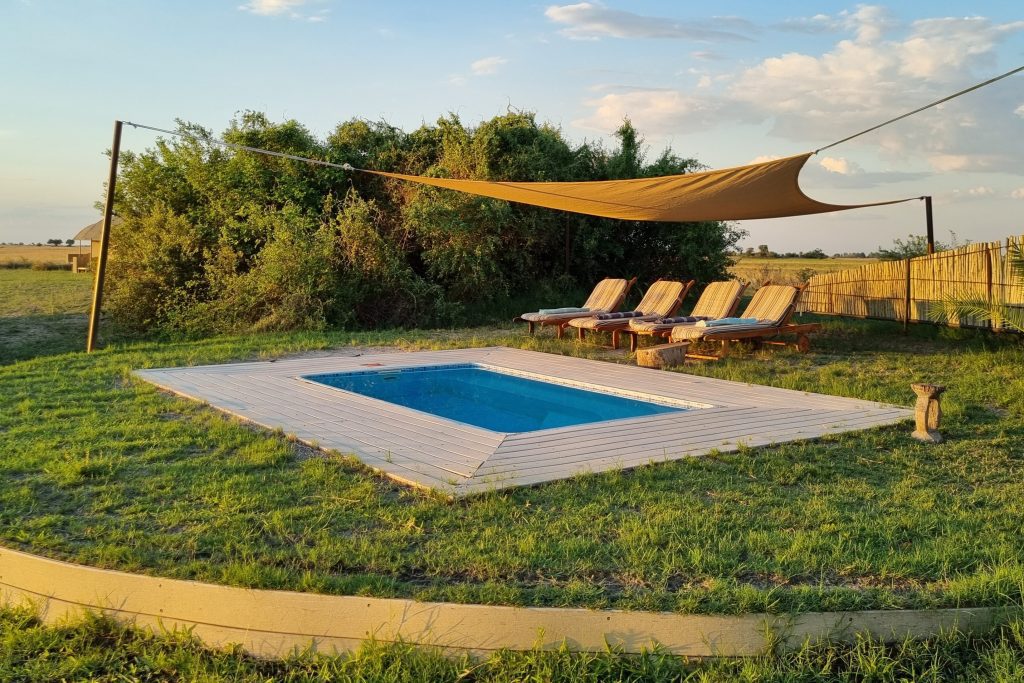
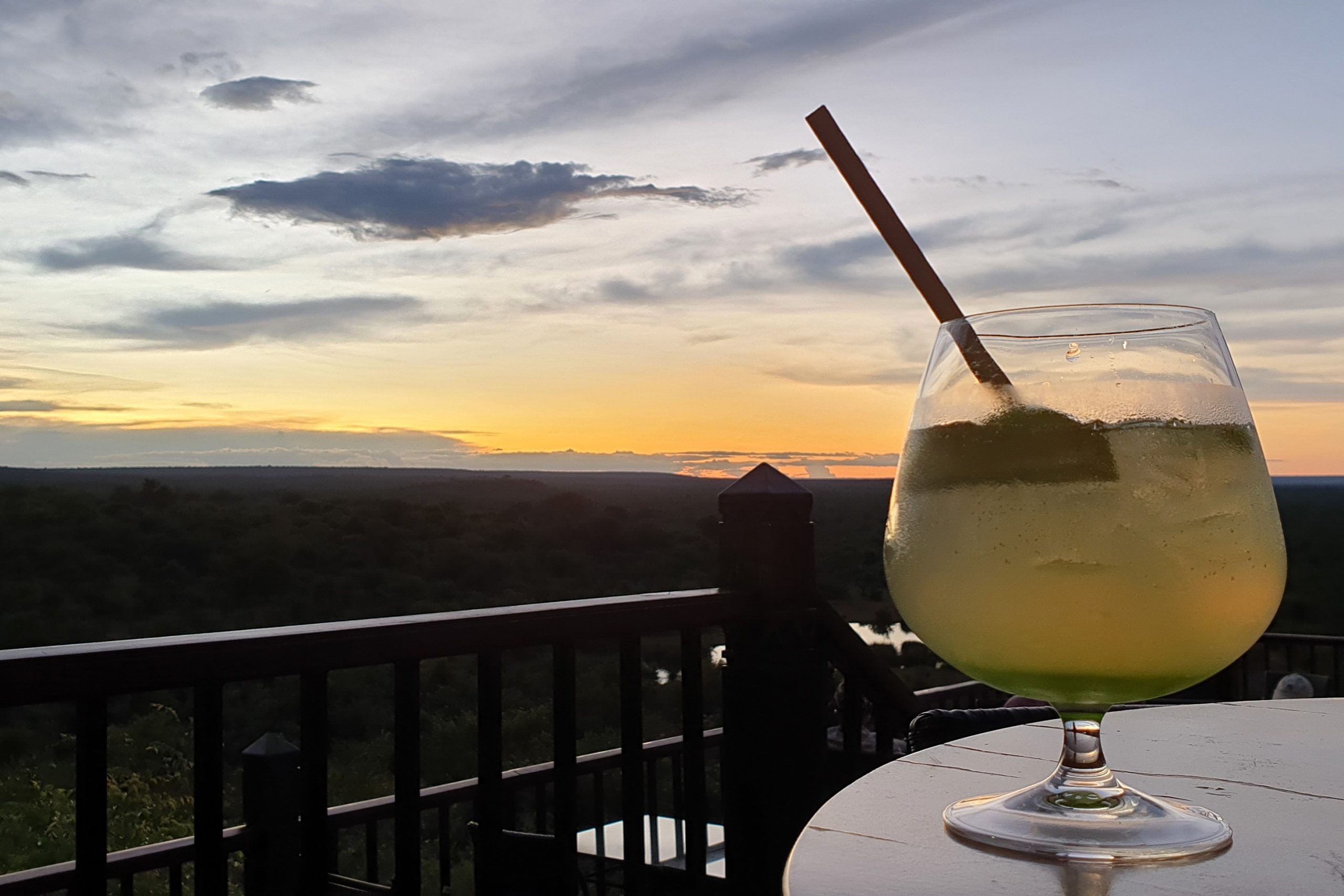
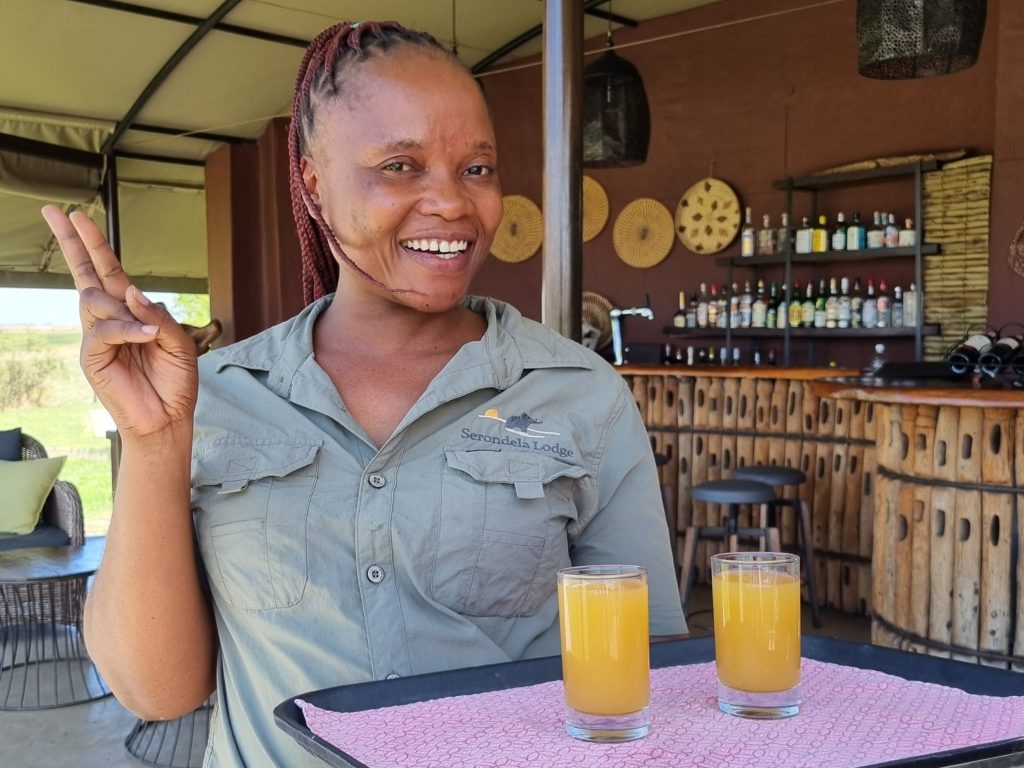
I consider a nap but opt for a dip in the delightful swimming pool before sheltering from the heat beneath a large, slowly rotating fan, iced beverage in hand. The bar is made with repurposed cattle yokes, grass baskets adorn the walls, driftwood becomes furniture… and elephants come down to the river to drink, indicating that it’s time for a sundowner cruise.
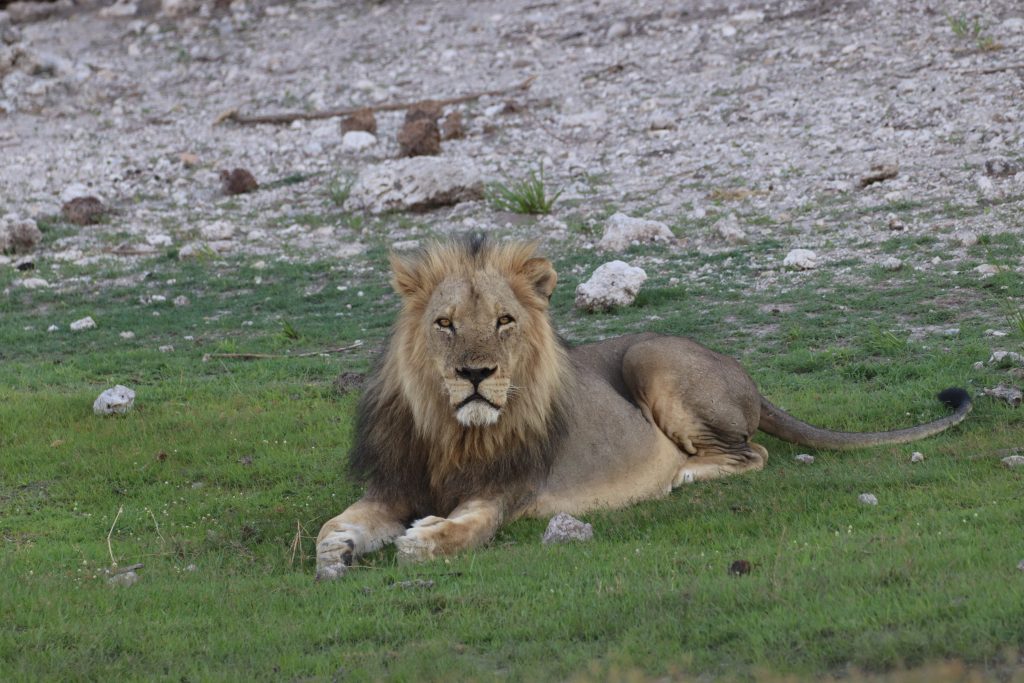
Simone explains that Serondela Lodge was built as a collaborative venture with the Kabulabula Conservancy, an endeavour that brings both employment opportunities – 95% of Serondela staff are from the local community and conservation benefits. He tells us that together with the Kwando Carnivore Project they have been instrumental in establishing a human-lion mitigation project.
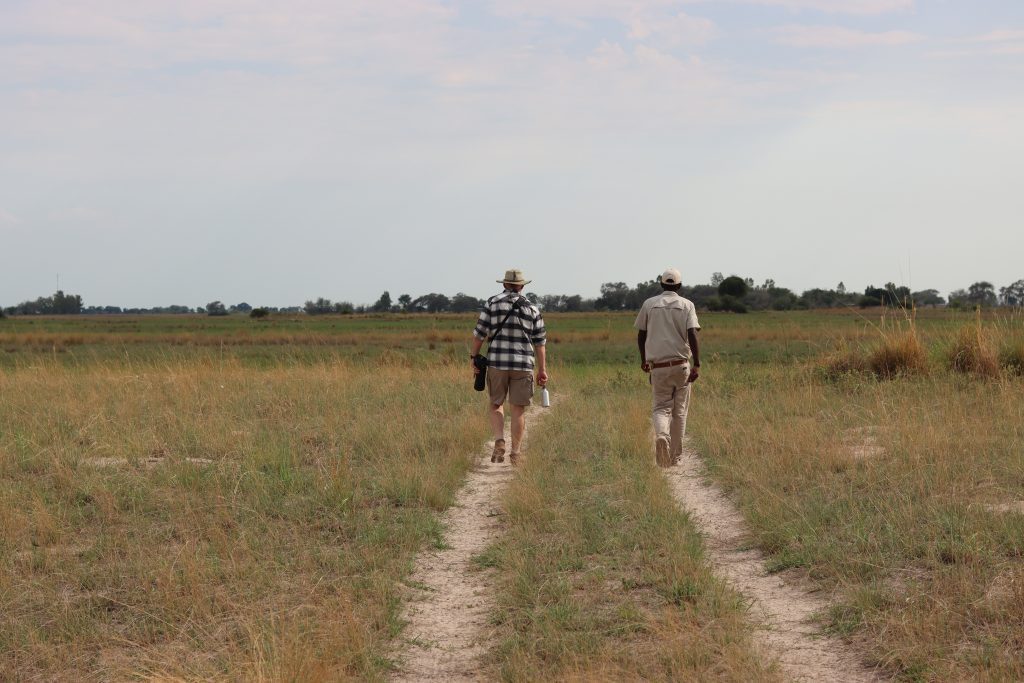
I’m keen to see this project in action, so after a hearty breakfast we head to the local village with our guide Nico, who lives there and has been with Serondela from the start, going from fisherman to guide, learning his skills from books. We walk across the grassy floodplain – it’s dry now, but Nico explains that in the wet season when the river floods, access is by boat only – it’s hard to imagine the area underwater. He points out a blue bush (Diospyros lycioides) and we learn that it used as a tooth bush, that buffalo dung is used instead of wood as fuel for the fire, and that elephant dung is collected to burn as a mosquito repellent and has the added benefit of clearing the sinuses.
At Ijambwe village we are met by the community guide, Victor, he takes us to the cattle enclosure, there are a few calves inside – the moms are out grazing. We watch as oxpeckers take care of any ticks. Victor tells us that the fenced enclosures are working well to keep their livestock safe from the lions and that even though the lions can see the cattle through the tall fencing, they are afraid of being trapped inside with no escape, so they generally leave them alone.
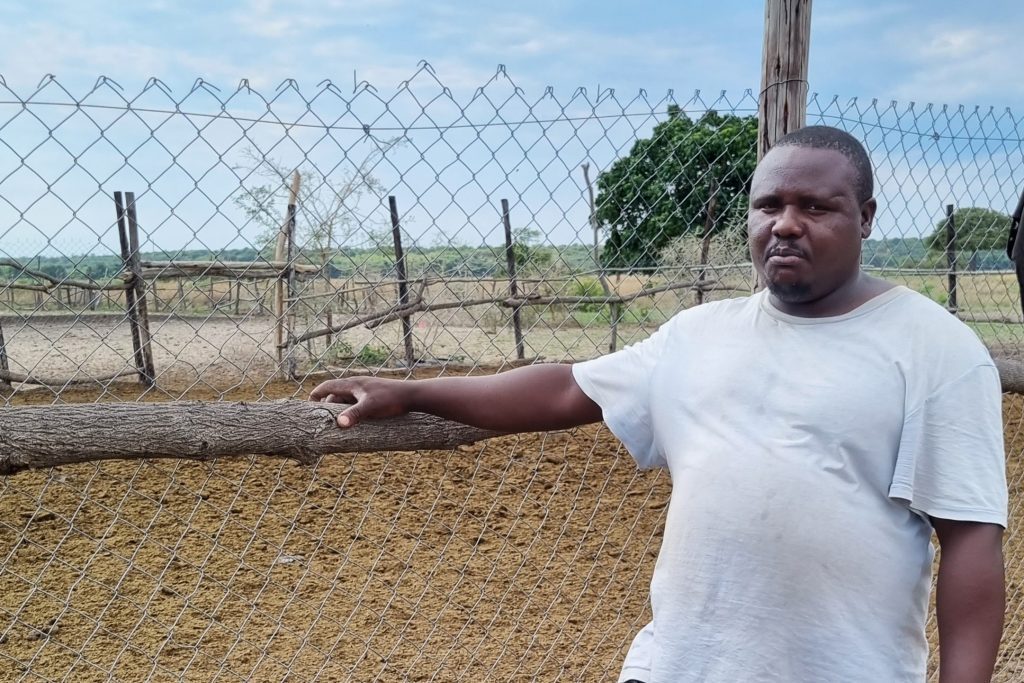
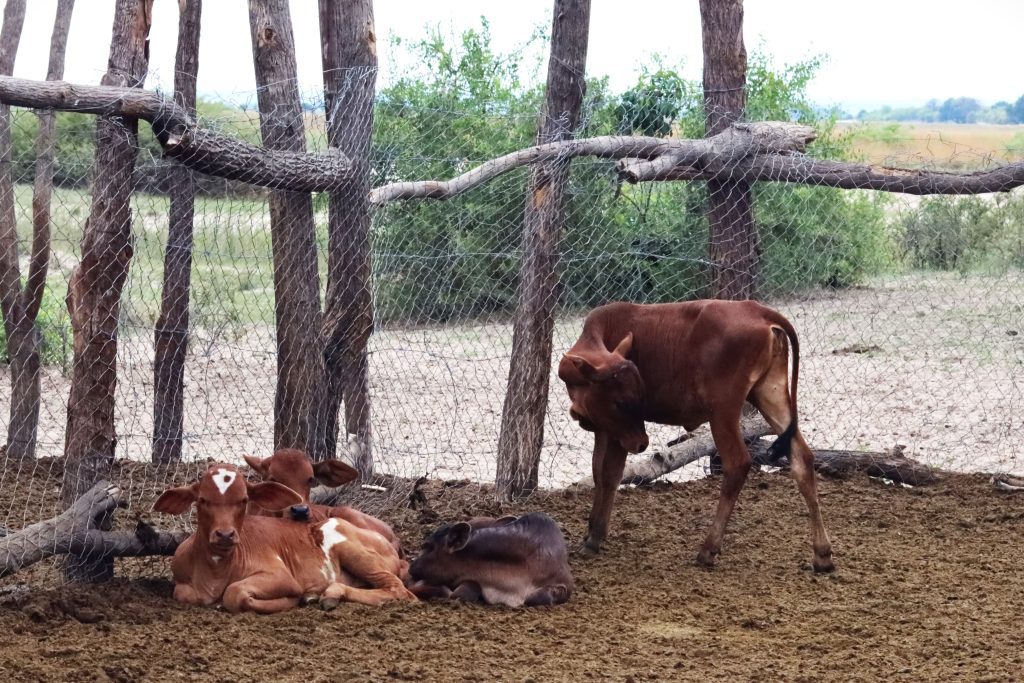
He tells us about the community ‘lion guards’, also established by the Kwando Carnivore Project, who give an early warning to the community when lions are spotted enabling them to guard their livestock and chase the lions away.
Victor proudly tells us that the village is home to his extended family – grandparents, aunties, cousins… I appreciate how neat and tidy the village is, and that there’s an abundance of fruit trees: mango, papaya, lemon, mulberry and guava, and a eucalyptus tree. Victor tells us how they use leaves from the eucalyptus tree boiled together with lemon, guava and mango as a remedy for coughs. There’s even a solar panel that is used to power a pump for borehole water, it’s one of two – one “done by Simone” he says, “the other one we did”. Having water readily available has reduced the need to collect water from the river, a dangerous chore considering the abundance of crocodiles. He tells us that they are in the process of putting in toilets, “we have a lot of old people here in the village, it’s not good for them to walk far, and it’s dangerous” he says.
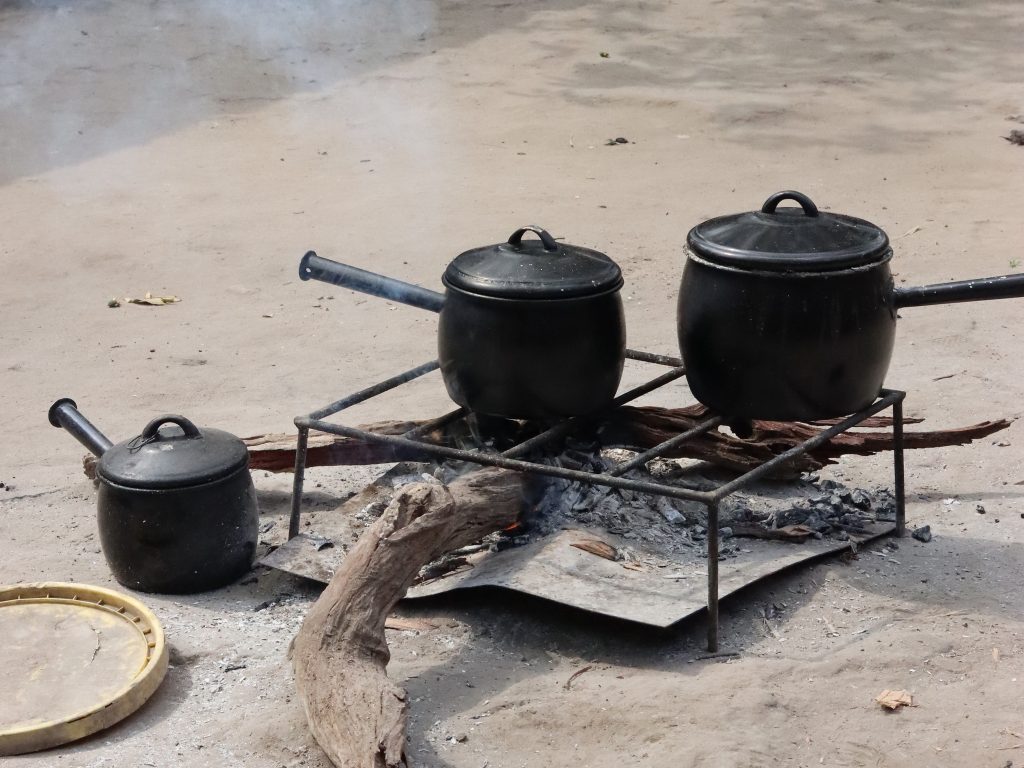
Village life continues around us, Victor explains their culture and traditions, we learn how their homes are built with natural materials and how they use cow dung and sand from termite mounds to get a smooth floor, and the way they chill water in clay pots and how they cook food over an open fire.
He tells us how challenging it is to grow crops with the dry weather conditions and then the elephants that sometimes raid their crops before they’re ready to harvest. I smile as we walk past a satellite dish for TV and a small solar system for charging batteries.
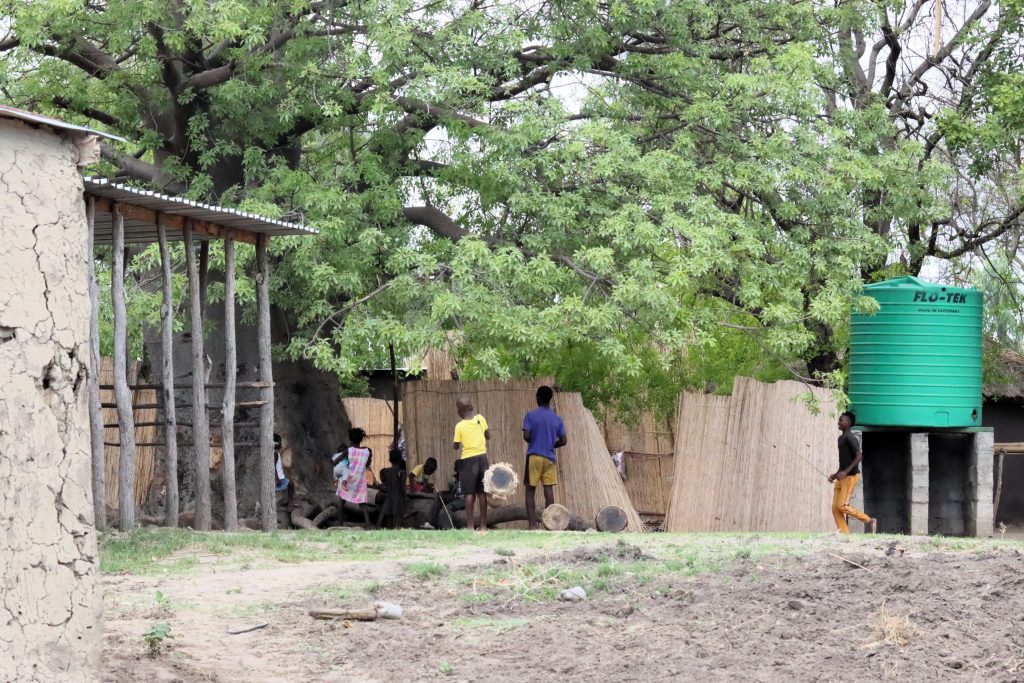
We are invited into a reed enclosure located beneath a huge baobab (Adansonia digitata) and an equally huge ana tree (Faidherbia albida) where we are welcomed with traditional song and dance – even the little ones get involved. The one little girl is wearing a ‘reed skirt’ over her clothes, it has bottle caps attached which tinkle as she sways to the rhythm of the drums played by three young boys.
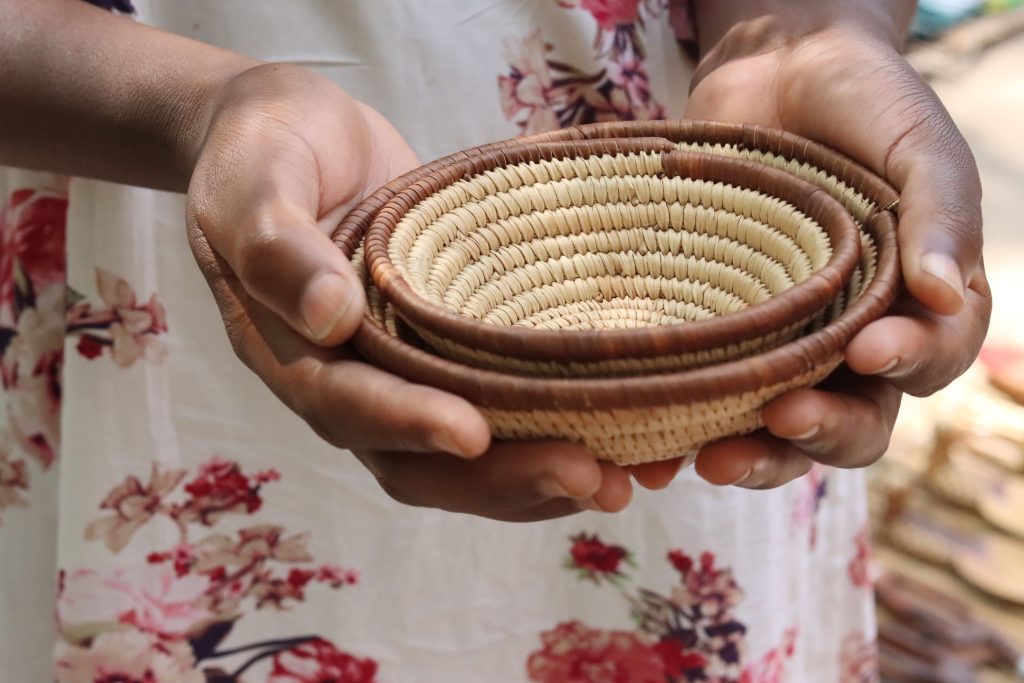
The ladies invite us to join the dancing and after many giggles at our lack of African rhythm we are invited to shop… it’s not intrusive, and we choose our keepsakes without the hassle sometimes experienced in similar occasions. Victor tells us that the money from visiting Serondela guests is most welcome and helps them to do village improvements. We wave our farewells and leave a contribution in the wooden chest for the community.
But for now, it’s back to the pool to cool off before another sundowner cruise, hopefully with more elephants, plenty birding and possibly even a few lions.