Ichingo Chobe River Lodge had been on my travel wish list for years… not for its renown as a world-class fishing destination, but the allure of sleeping under canvas beneath huge trees alongside the fast-flowing water of the Chobe River. And of course, the birding!
A quick Google search will undoubtably have you planning a fishing-focused getaway, but as experienced, this remote Chobe River destination, offers so much more!
Here’s my top five reasons to book your stay at Ichingo Chobe River Lodge…
1: The Place:
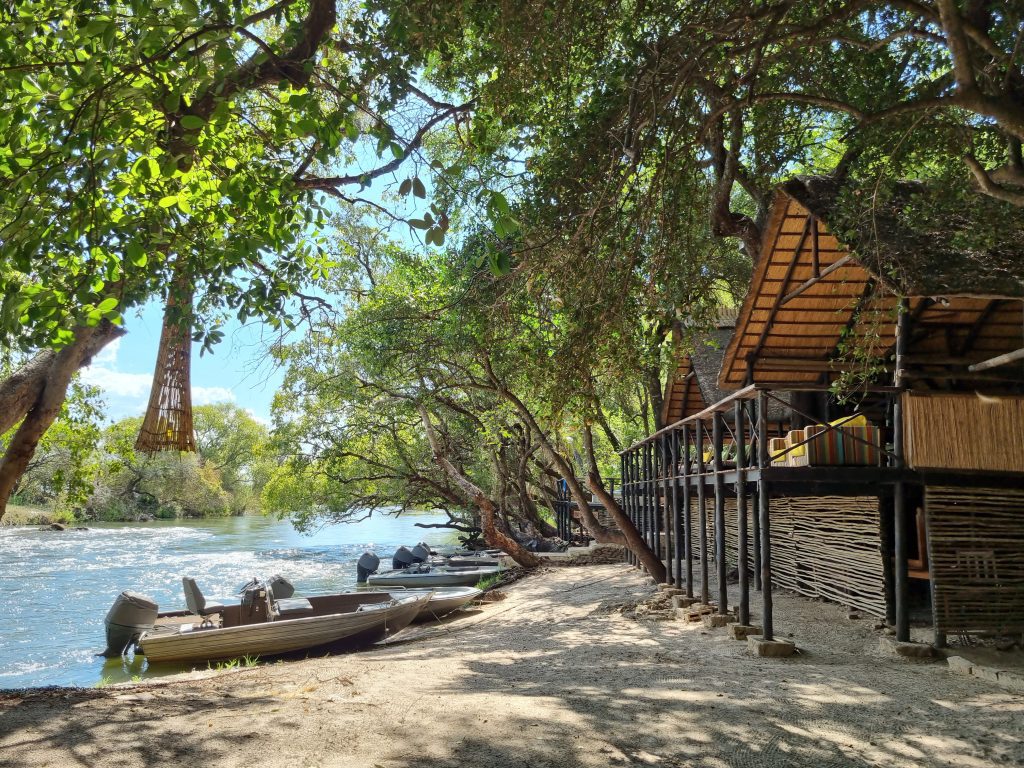
Ichingo Chobe River Lodge is nestled into the riverine forest on the Namibian side of the Chobe River on Impalila Island. With Namibian immigration dealt with, Raphael, our guide for the duration of our stay, steers his way expertly through the rapids, and avoiding submerged rocks and fighting the pull of the briskly flowing river, had us docking alongside the Mantis Ichingo Chobe River Lodge jetty in no time at all.
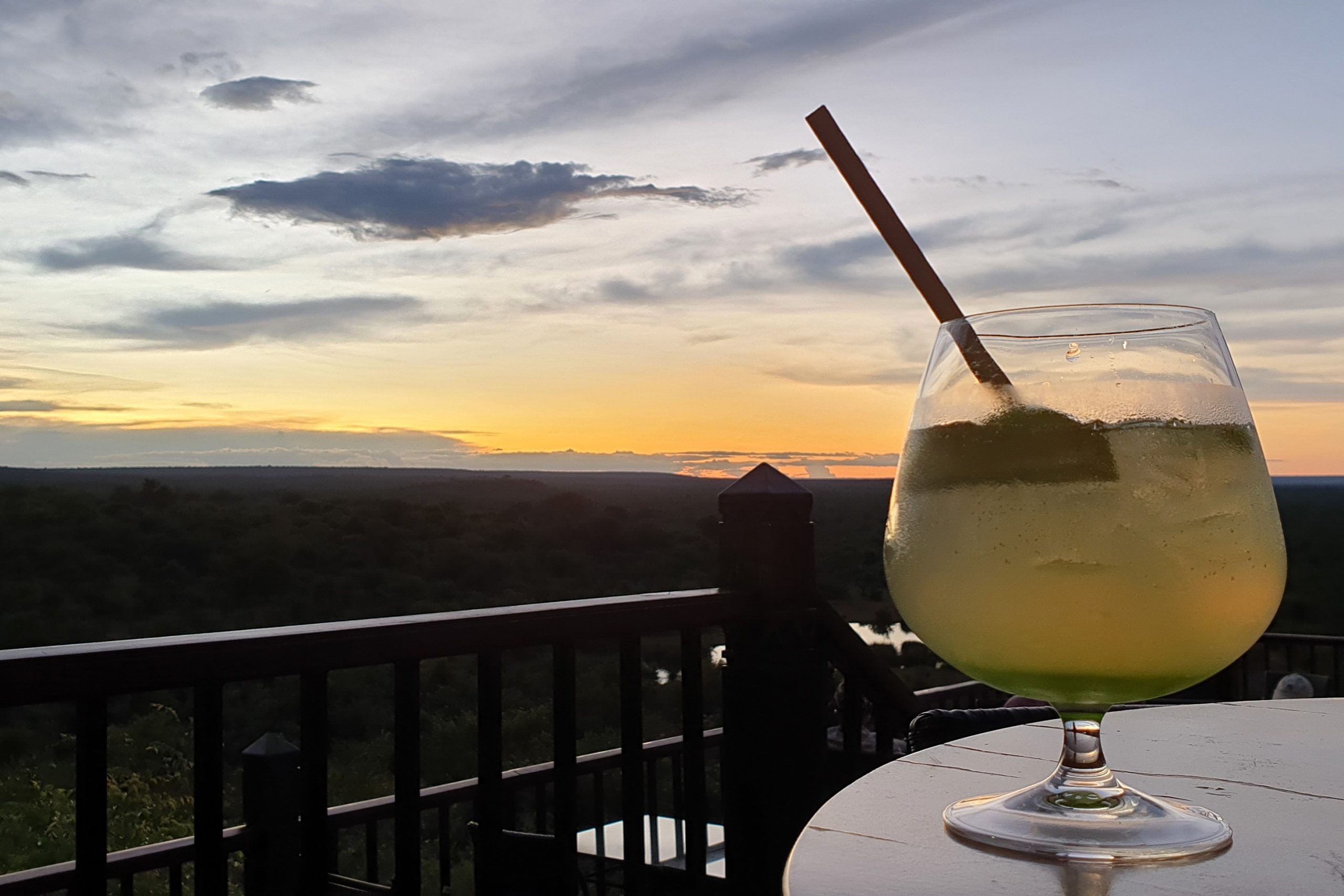
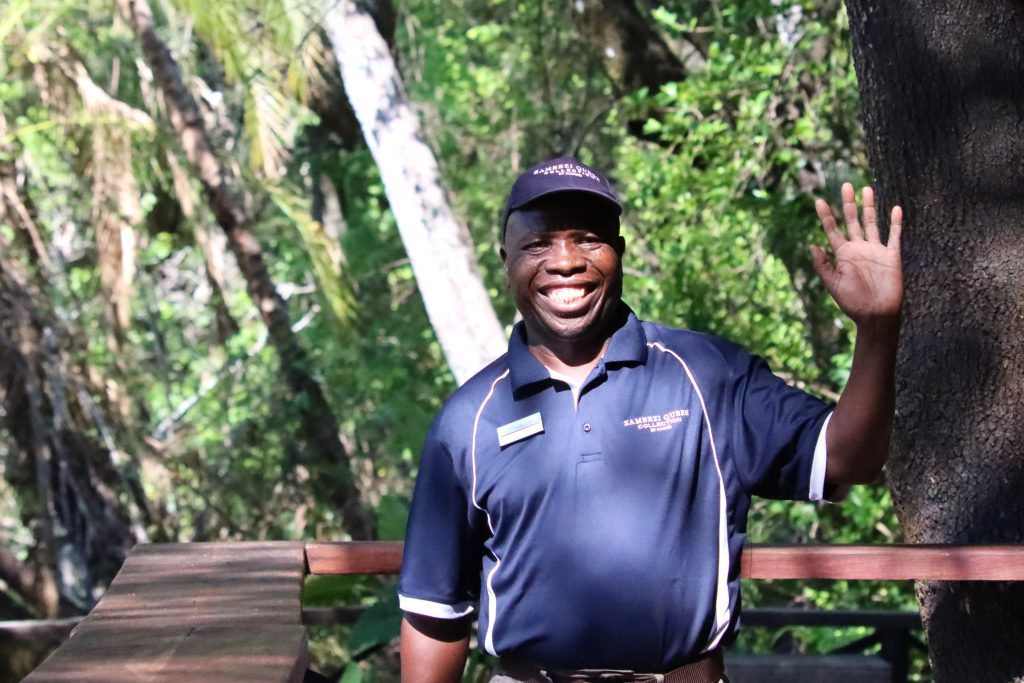
We were welcomed with a chilled face cloth, icy drinks and Kennedy’s broad smile and hearty laugh – as Front of House Manager, his laugh certainly set the tone for the rest of our stay. Our Meru-styled tent, one of only eight, is delightful, and a wonderfully cool space to escape the December heat, thanks to being airconditioned! Our private balcony perched above the river offering relaxing views into the trees and the water beyond. Waking up, literally ‘at sparrows,’ with a myriad of bird sounds is an absolute delight – and one of the advantages of sleeping under canvas.
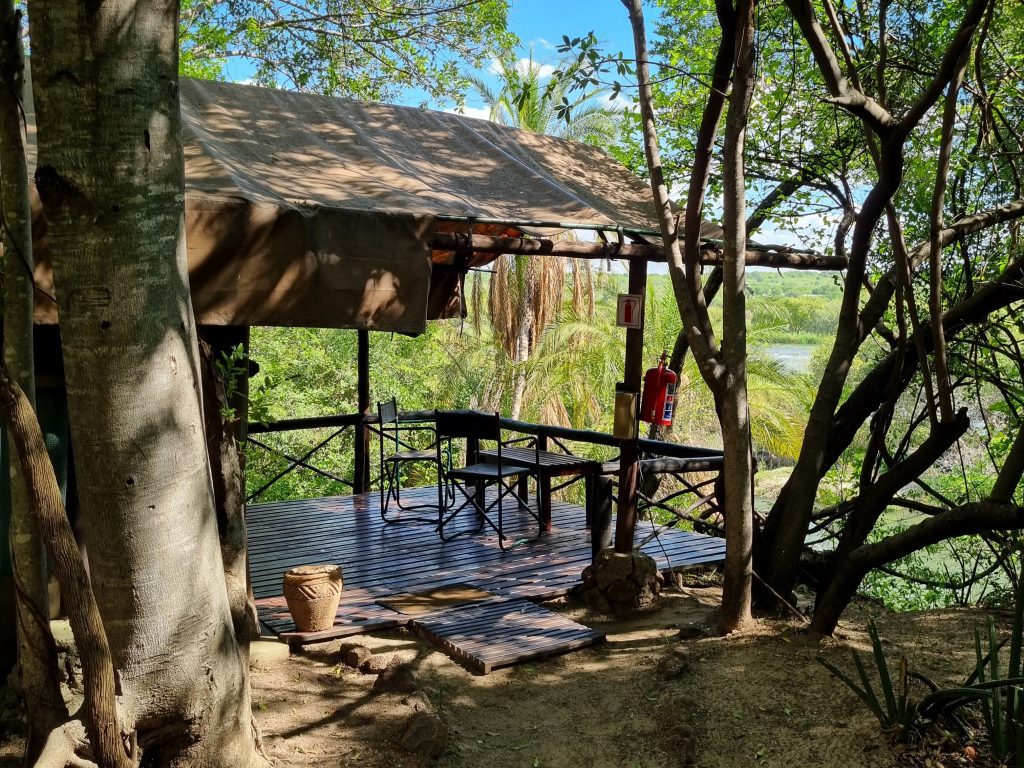
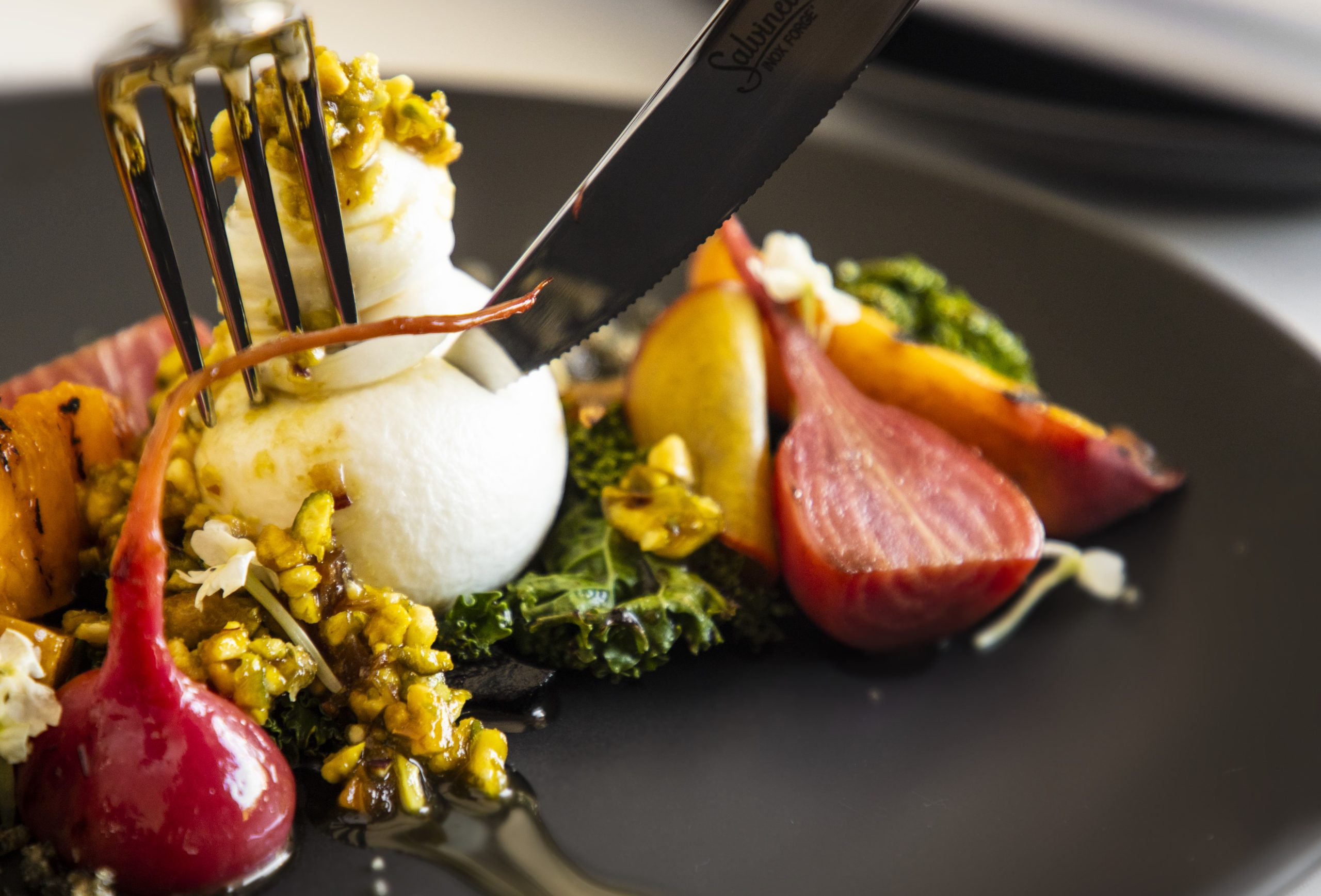
The lodge décor is cheerful with comfy sofas and chairs to take in the river views, enjoy Kennedy inspired cocktails and delicious meals. It’s also the place to meet fellow travellers, share travel tales – including about ‘the one that got away’, and make new friends.
2: The People:
For me, it’s always the people that make a stay memorable – from Kennedy’s fabulous smile and Raphael’s expertise and attention throughout our stay, to our very sweet waitress (whose name escapes me) and to the exceptionally kind chef who created gluten-free meals for me.
Most of the staff live on the island, so when the opportunity arose to explore, I jumped at it.
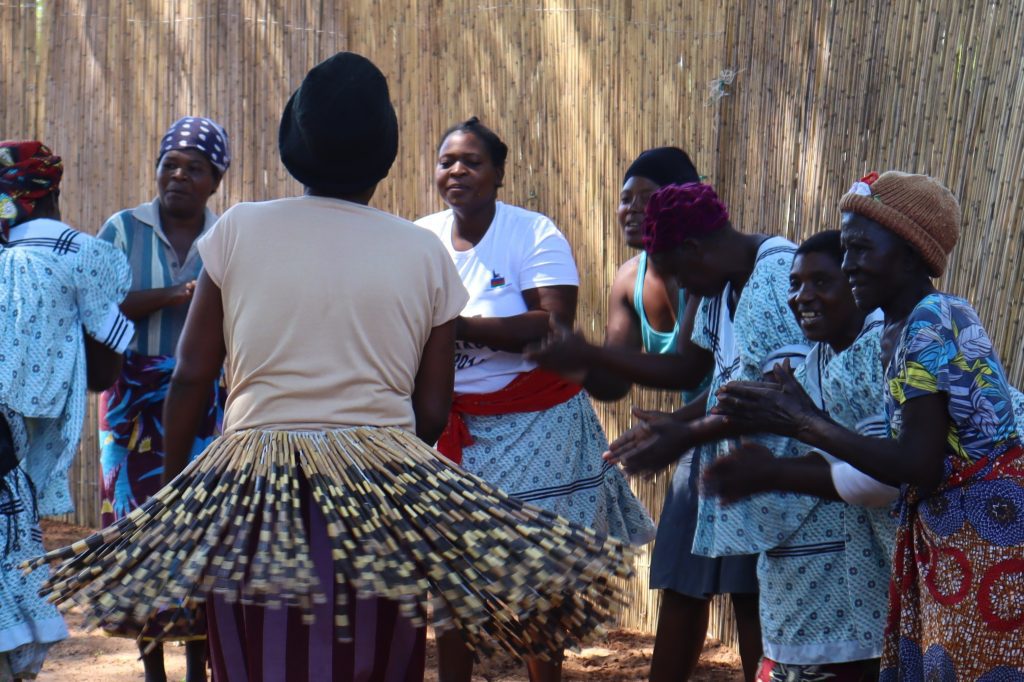
First up was a walk along the dusty road to the nearby village, where kids played, goats roamed, and hens scratched in the dirt. A huge baobab (Adansonia digitata) dominated, beneath it and within a thatch enclosure the village ladies welcomed me with song and dance. Displayed on colourful cloth were crafts and curios, ready for me to shop.
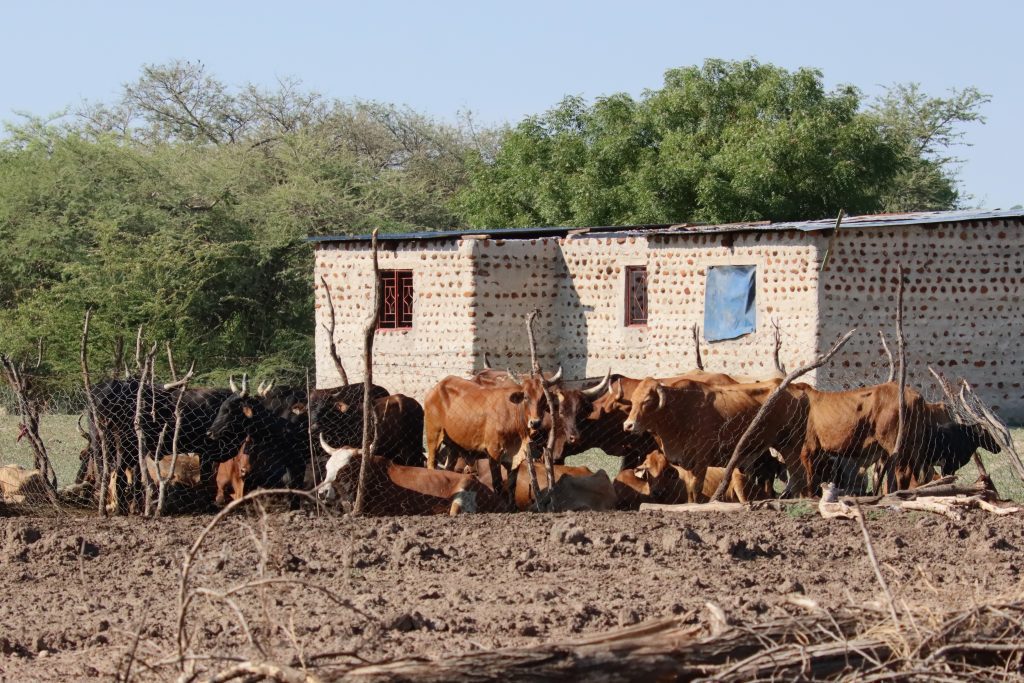
We took the scenic route back to the lodge, and Raphael explained village life, how the men build the houses from mopane poles and stones and the women use termite mound sand and water to plaster the walls, how branches from the rain tree (Philenoptera violacea) are used to make yokes for their oxen and how bark of the knob thorn tree (Senegalia nigrescens) is used to make a paste to heal wounded cattle.
A morning drive around the island takes us further afield. We pass the clinic and the school, pretty homesteads made from stones, kraals with cattle, and fields of mielies. Jackie our driver negotiates the sandy road, he points out the gleaming ribbons of tar – the new road is progressing well (Raphael tells us that the contractor is Namibian), men till their field with an ox-drawn plough, a woman carries a bucket on her head, and blood lilies thrive beneath a tree.
We stop to gaze across the Chobe at the impressive Kazangula Bridge, the quadripoint between Namibia, Botswana, Zimbabwe and Zambia. Tufts of grass and flood acacias dot the flood plain, crowned lapwings guard their nest and a coppery-tailed coucal hunts.
I love the perspective seeing the island gives, and a greater understanding of the landscape that Raphael traverses daily on his daily half-hour walk to and from home to Ichingo Chobe River Lodge.
3: The Wildlife:
The Chobe region is known for its abundant wildlife, and there’s nothing more special than seeing them from the water and being able to get up close and personal. With Raphael at the helm we cruise slowly up-river alongside Sedudu Island past the ever-present crocs and lurking hippos.
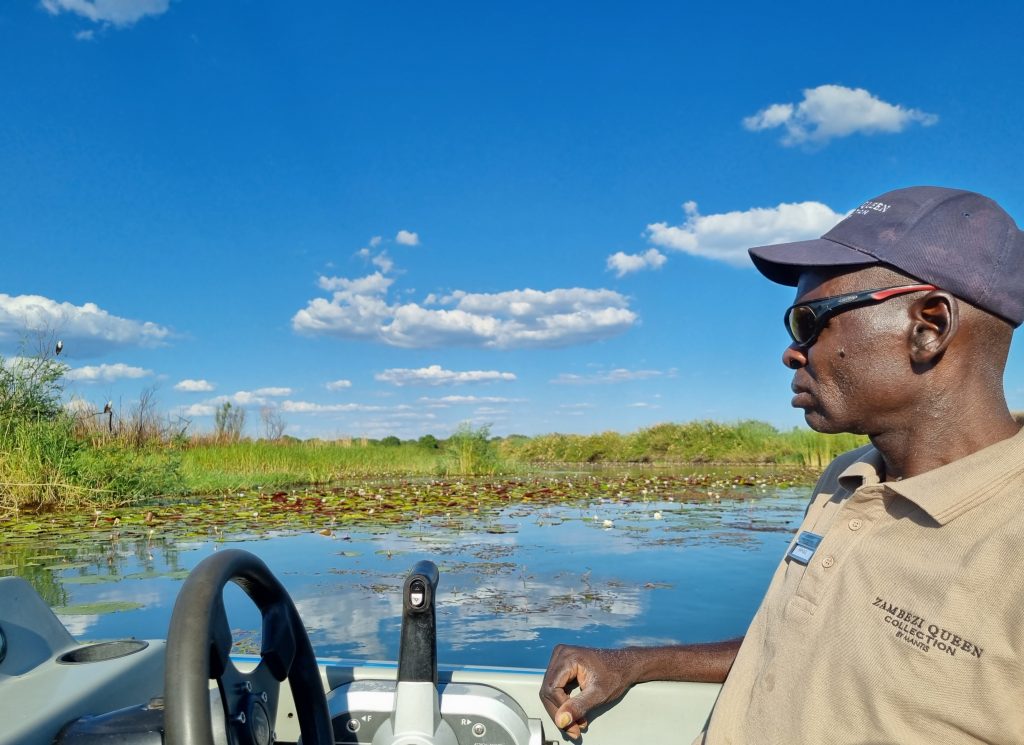
Seeing wildlife from the boat offers a vastly different perspective to that from a game viewing vehicle: we get eye-to eye with giant crocs, enable buffalo to really look down their noses at us, and get close enough to hippos out the water to see the deep scars left on their bulky bodies by territory disputes.
Further upstream elephants come down to the river to quench their thirst and impala drink cautiously from the water’s edge. A monitor lizard basks in the sun on a dead tree trunk, a pod of hippos, semi-submerged in a reed bed, feast away while egrets’ flit from back, to back.
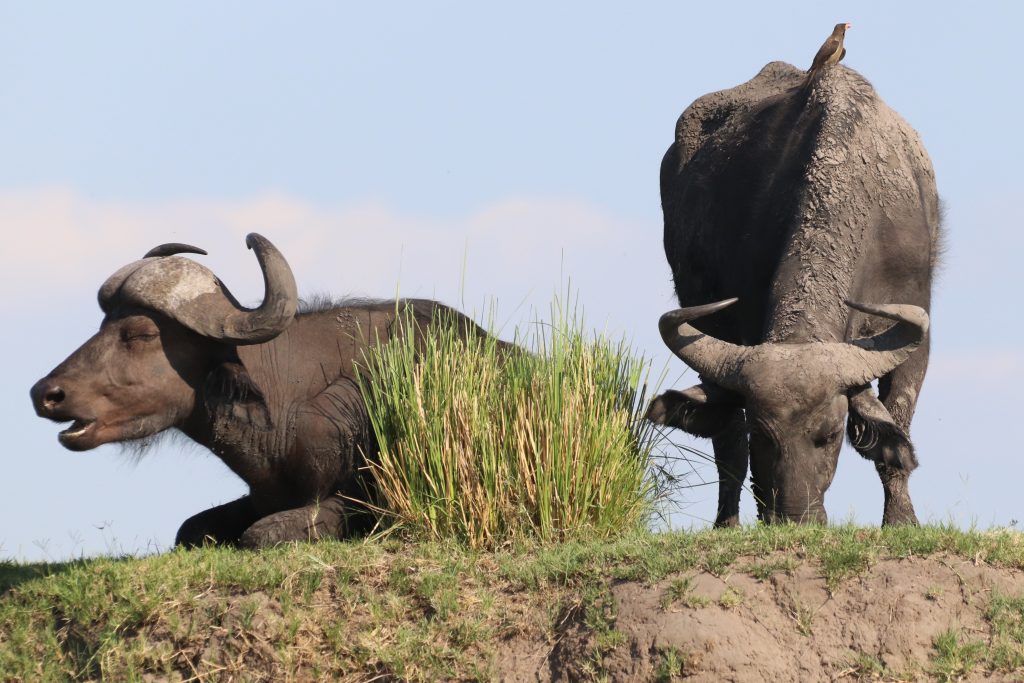
A buffalo peers at us from a high ridge, while yellow-billed ox-peckers feats on ticks upon his back. In the distance another herd of elephants make their way back to the Chobe National Park and we make our way back to the lodge pausing to enjoy the serenity of sunset on the river.
4: The Birding:
The Chobe River region, with its 450-plus bird species, is high on the list of every birder – and if not, it should be! From towering trees and broadleaf woodlands to lush riverine forest, grassy floodplains and papyrus lined inlets, our visit to Ichingo Chobe River Lodge exceeded all our birding expectations.
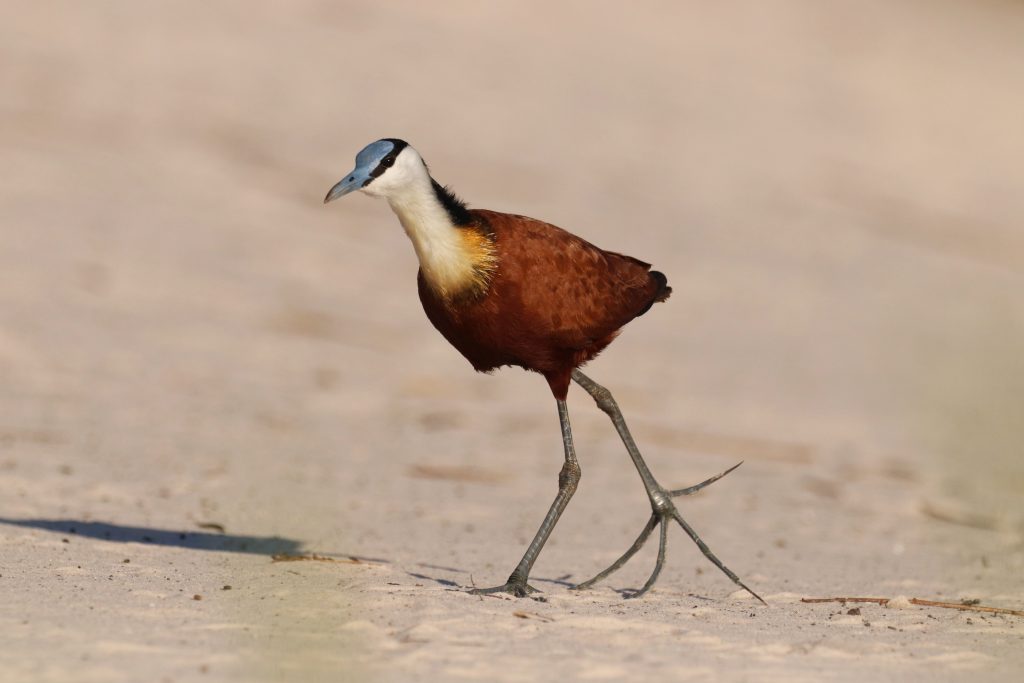
The branches of waterberry trees (Syzygium cordatum) hang low over the water, a giant kingfisher with a sizeable fish in its mouth, beats it repeatedly on the branch to break its bones for easier consumption, an African jacana searches the undergrowth for unsuspecting insects and a striated heron, poised on exposed roots, waits to strike at an unsuspecting fish – all this and we’d only just left the jetty.
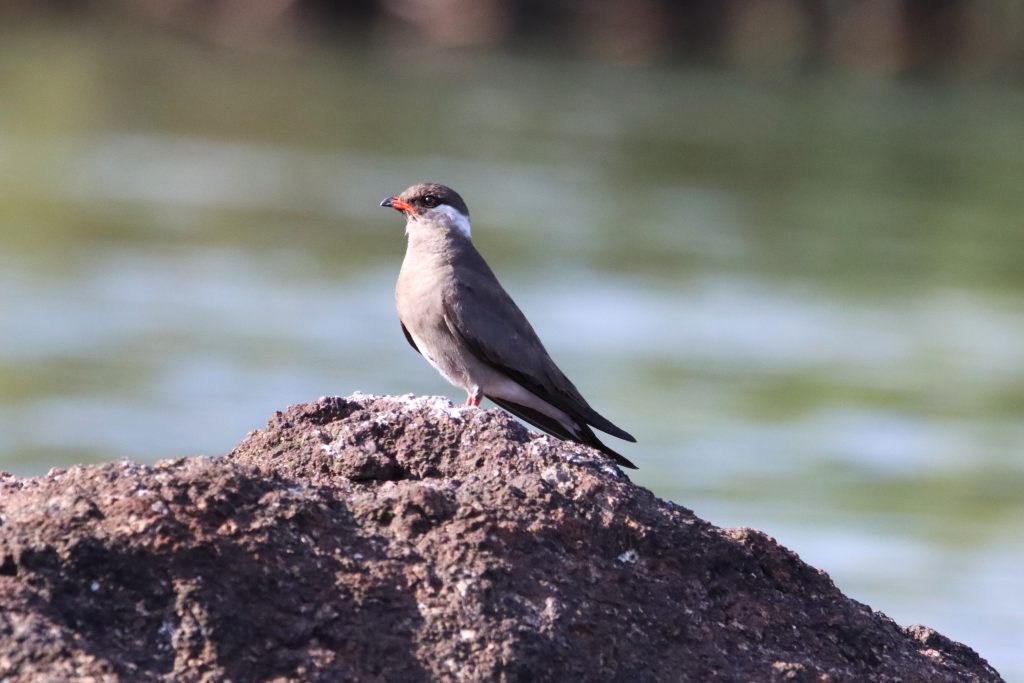
We’re motoring along slowly, Raphael points out a white- backed night heron, a first for us. As are the rock pratincoles and juvenile, yellow-billed storks we see on the exposed rocks at the rapids. A water thick-knee eyes us out as we veer off towards the Kasai channel, a waterway that links the Chobe to the Zambezi River.
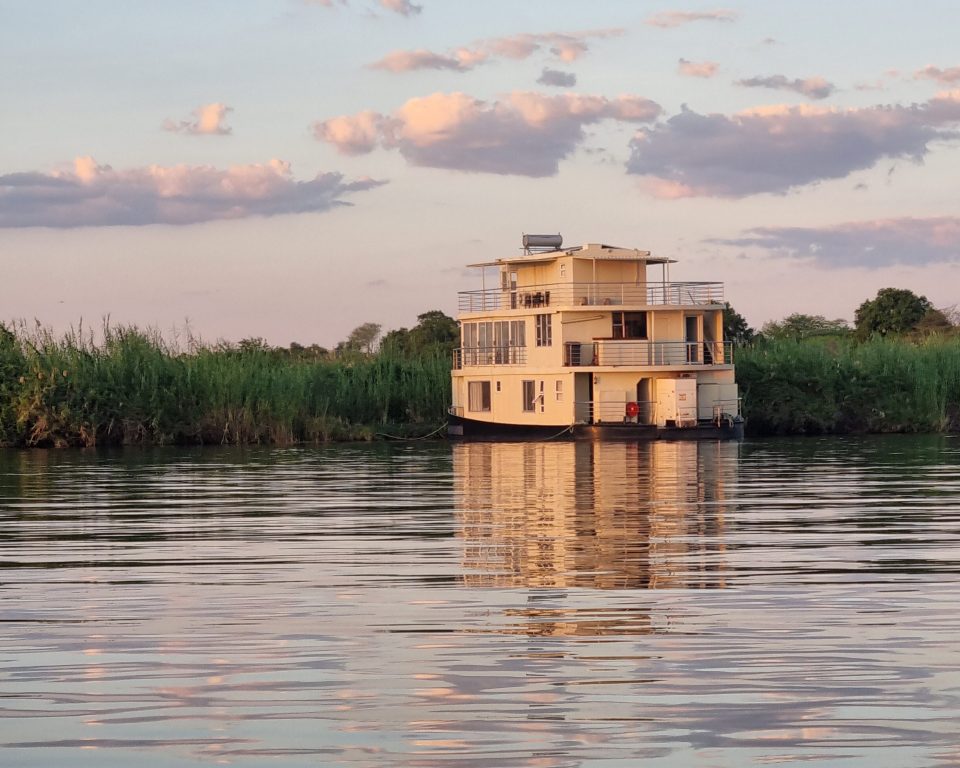
The Chobe Princess sits elegantly on her mooring alongside the reeds, a pair of African fish eagles gaze down upon us, and a malachite kingfisher perches nimbly on a reed as broad-billed weavers create their intricate nests. We see coppery-tailed coucals, blue-cheeked bee-eaters and a pair of African stonechats.
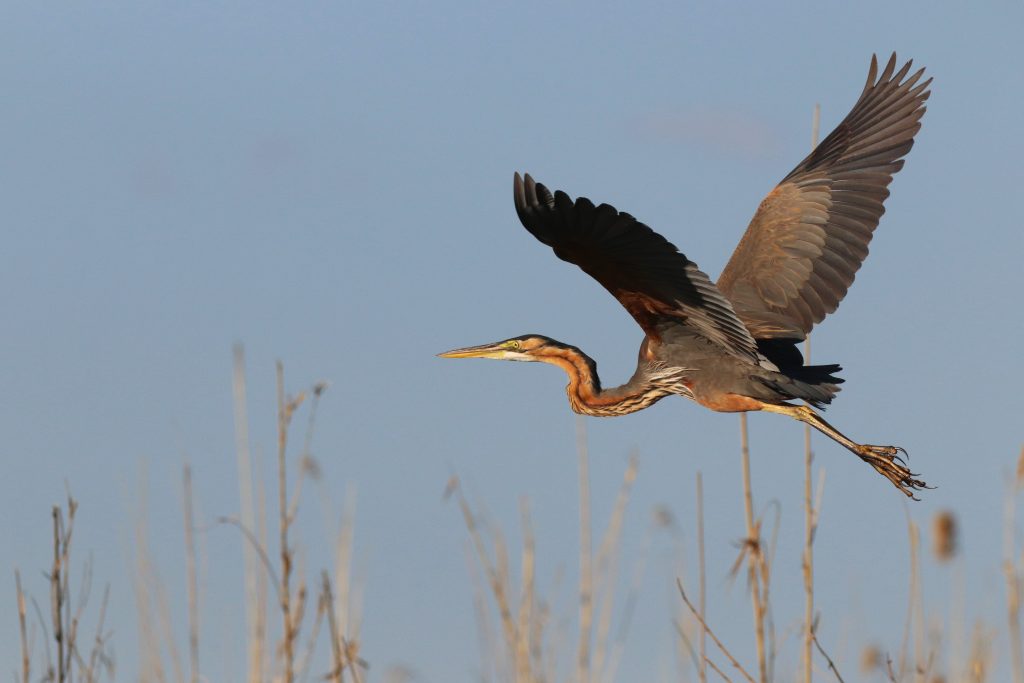
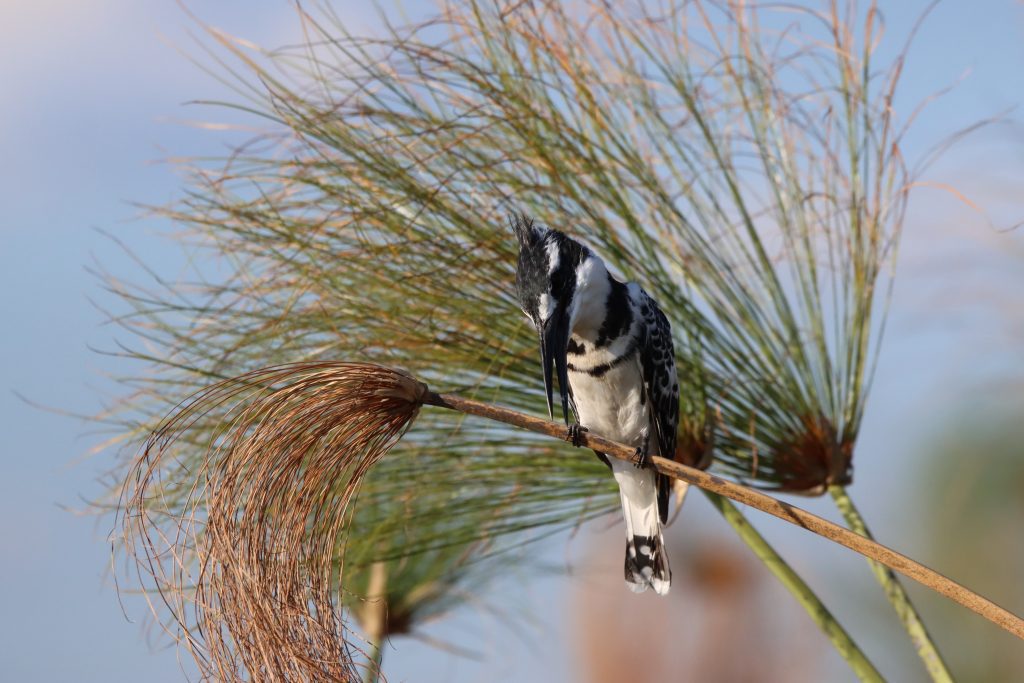
Raphael speeds up suddenly to avoid an aggressive hippo that lunges towards us with intent – ‘the criminals,’ as he calls them, ‘need to be respected and kept at a distance’. Further up the channel we watch a pair of long- toed lapwings in a territorial fight, an African jacana scurries across a sandbank and a purple heron takes flight. Waterlilies float on the still water and a pied kingfisher perches on a papyrus stem, oblivious of our presence, such is its focus on the water below. This is a veritable paradise for water birds, and we soon see black- headed herons and an African swamphen.
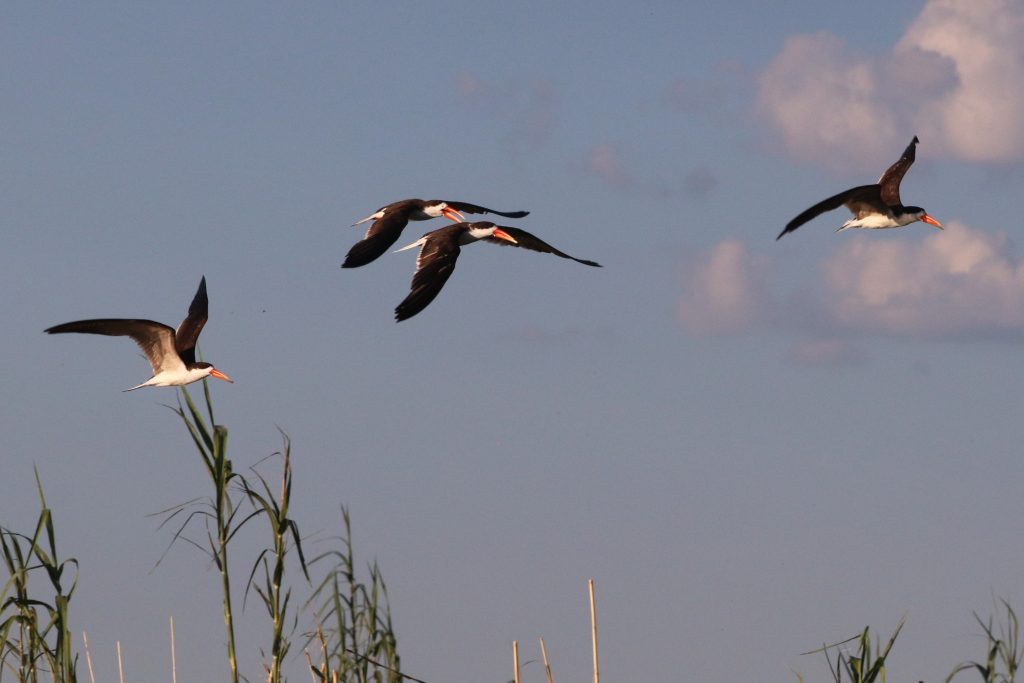
African openbill, African spoonbill and white-faced whistling ducks are added to our list, as well as African skimmers, which is an absolute highlight. We watch an African skimmer chick as it scuttles into the scrubby grass where its mottled brown feathers gave it perfect camouflage. It caused much alarm whenever it stood up, the adults taking flight to draw our attention away from it. An incredibly memorable sighting.
Our boat cruise upriver to Sududu Island yields even more waterbirds and we quickly add great white egret, blue-billed teal and what we think is a great snipe to our list. There are flocks of collared pratincole as well as several African openbill, African wattled lapwing, reed cormorants and African darters.
An early morning walk in the woodlands behind the lodge add a few more species to our list: tropical boubou, Hartlaub’s babbler and lesser swamp warbler, amongst others. While my hubby focused on the birds, I appreciated the blooms of the tall white squill (Drimia altisima) and the blood lilies (Scadoxus multiflorus), which were plentiful after the recent rain.
5: The Eco-credentials:
When I travel it’s important to me that the places I stay at are committed to making a positive impact on those around them.
I love that Ichingo Chobe River Lodge is committed to employing locally and that they offer opportunities for growth, that local communities benefit from guest visits, and that local conservancies and landowners benefit financially through land usage agreements.
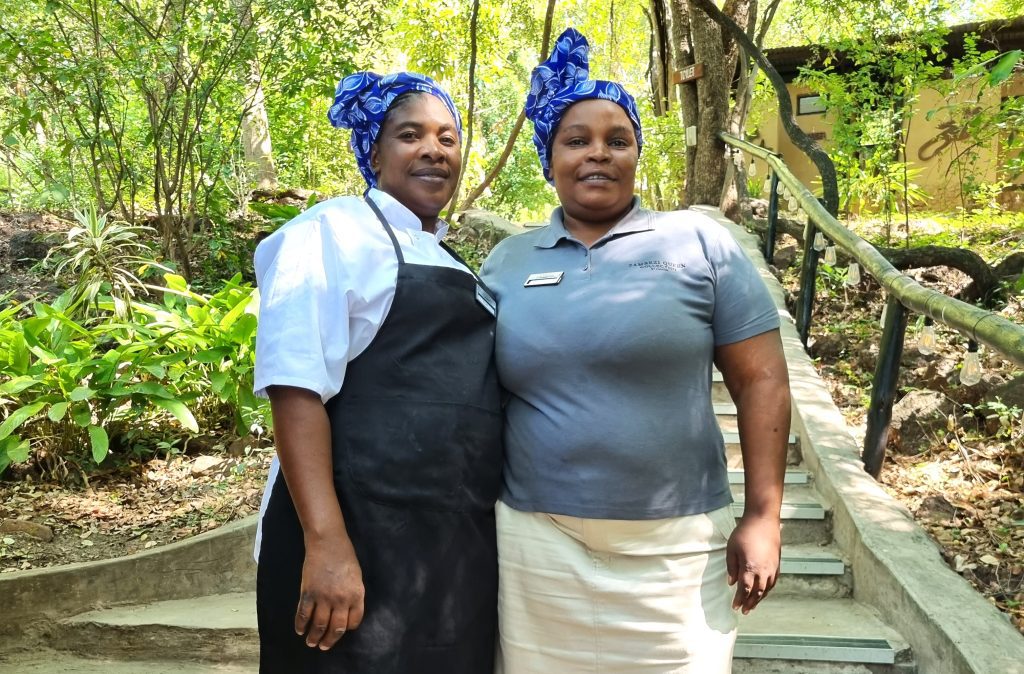
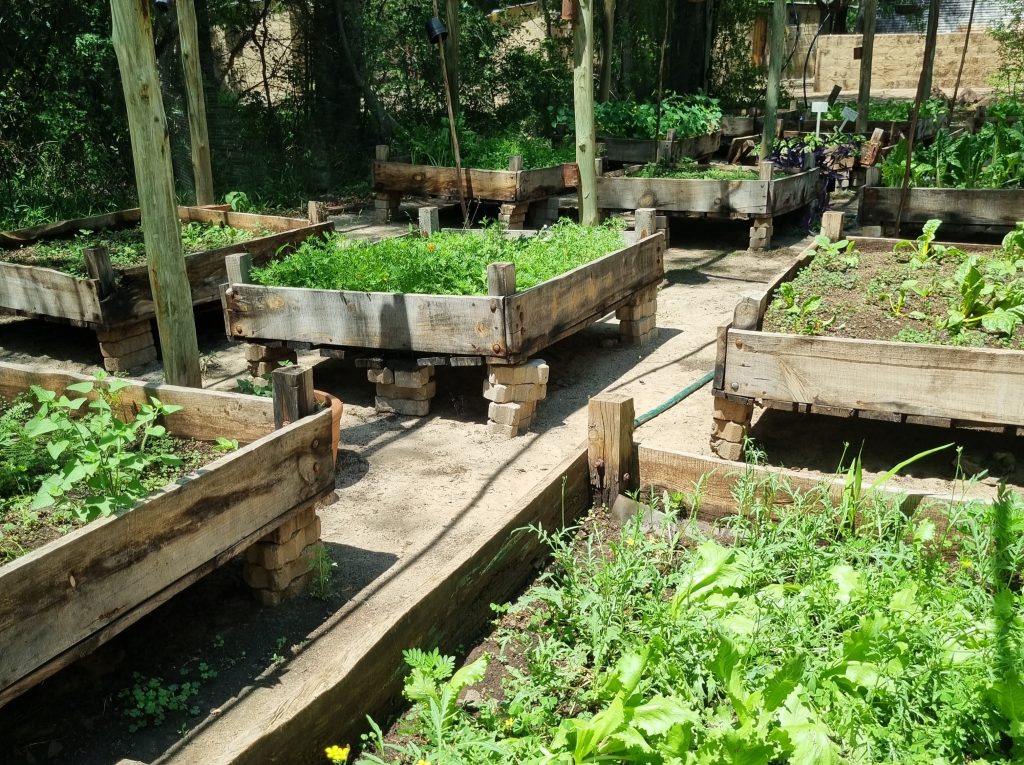
I love that meals are often African inspired, that supplies are sourced from local markets and suppliers, including from their own vegetable garden which I had the pleasure in visiting. I loved that I was always greeted with a smile, that staff were comfortable having conversations with me, and that many of them had been at Ichingo for more than a decade – a great indication of job satisfaction.
And I love that as a group, Mantis and the Zambezi Queen Collection, which includes Ichingo Chobe River Lodge is committed to conservation, sustainability, and community development. Things that, besides enjoying the experience, are really important to me when I travel.